
This pathway is for businesses, industrial facilities, agricultural operations, and commercial property owners installing on-site clean energy systems.
Rooftop and parking‑canopy solar, battery storage, microgrids, and deeper energy‑efficiency retrofits let businesses generate their own clean power, cut demand charges, and improve resilience during grid outages.
By stacking on‑bill energy savings with incentives, tax credits, and flexible financing options, many commercial and industrial customers can turn these projects into cash‑flow‑positive upgrades from day one.
Incentives & Rebates
Federal Tax Credit Update: Federal IRA investment tax credits (Section 48/48E) have domestic content requirements increasing in 2026. Contact ECAM to discuss eligibility and alternative financing strategies.
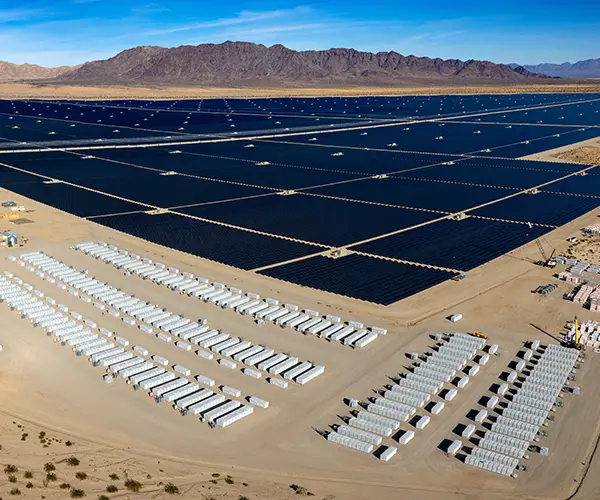
On‑Site Solar & Storage
Cut your electric bills and demand charges by pairing rooftop or parking‑canopy solar with battery storage and, where needed, backup generation or microgrids. New Mexico’s Solar Market Development Tax Credit (SMDTC) can cover 10% of eligible solar costs for many commercial and agricultural systems, which can be combined with the federal Section 48/48E investment tax credit and your utility’s net‑metering or solar export rules.
Businesses can also use C‑PACE financing to spread project costs over long terms as an assessment on the property, often making projects cash‑flow positive from day one.
Typical system sizes: 10 kW to 2 MW rooftop/ground-mount solar plus 50 kWh to 1 MWh battery storage.

Whole‑Building Retrofits & Efficiency
Lower your total energy use and improve comfort with whole‑building retrofits, including lighting, HVAC, controls, insulation, and envelope upgrades. New Mexico’s Sustainable Building Tax Credit (SBTC) and Energy Conserving Products (ECP) Tax Credit can reduce upfront costs for high‑performance projects, while Energy Savings Performance Contracts (ESCOs) and performance‑based financing through EMNRD allow you to pay for upgrades from guaranteed savings over time. Where eligible, buildings may also pair these measures with Home Energy Assistance or related programs that support deeper retrofits for qualifying customers.
Best for buildings over 10,000 sq ft or portfolios of smaller buildings

EV Charging & Fleet Conversion
Electrify your fleet and install workplace or public charging to cut fuel costs and emissions while preparing for future vehicle standards. New Mexico’s state Electric Vehicle Tax Credit for charging equipment can be layered with the federal Section 30C alternative fuel refueling property credit and utility EV‑charging or managed‑charging programs where available. Many utilities also offer EV‑specific rates and demand‑response programs that reward smart charging behavior and charge‑management systems, further improving project economics.
From workplace Level 2 charging (5-10 vehicles) to fleet DC fast charging hubs (20+ vehicles)
Utility Programs & Rates
Understanding customer/offtaker billing options and interconnection
- Net metering and export credits: Most New Mexico utilities offer net metering or similar export credit programs that allow customers with on‑site generation to offset their consumption, typically up to about 120% of their annual load, subject to each utility’s tariff and PRC rules under 17.9.568 NMAC.
- Community solar subscriptions: Eligible customers can subscribe to community solar projects (where available) to receive bill credits from a shared solar array instead of installing panels on their own roof.
- Time‑of‑use (TOU) and demand response: Many utilities offer TOU rates and demand response options that reward shifting load to off‑peak hours or reducing use during peak events, which can improve the economics of EV charging, storage, and building controls.
Which utility serves your location?
- Albuquerque metro, most of central NM → PNM
- Las Cruces, southern NM → El Paso Electric
- Northeast NM (Clovis, Portales, parts of ABQ) → Xcel Energy/SPS
- Rural areas → Check with your local electric cooperative or municipal utility
Not sure? Visit https://www.prc.nm.gov/utilities/ to identify your electric provider.
Major utility links (interconnection and rates)
PNM
- Interconnection and net metering: PNM Interconnection and Net Meteringpnm
- Customer solar programs and rates: PNM Customer Solar Energy Programpnm
El Paso Electric
- Small‑facility interconnection (less than 10 kilowatts): El Paso Electric New Mexico Interconnection of Facilities Less Than 10 kWepelectric
- Generator and transmission‑level interconnection: El Paso Electric Generator Interconnection Requestsepelectric
Xcel Energy / Southwestern Public Service (SPS)
- Distributed energy resource process and installer guide: Xcel Energy SPS Distributed Energy Resource Interconnection Portal – New Mexicoxcelenergy
- SPS New Mexico tariffs and rate schedules: Xcel Energy SPS New Mexico Tariffsxcelenergy
New Mexico Public Regulation Commission
- Renewable energy and interconnection rules, utility plans, and RPS information: New Mexico PRC Renewable Energynm
- Statewide community solar program details and utility links: New Mexico PRC Community Solarnm
Rural cooperatives and municipal utilities: Contact the local utility directly or see links from the PRC’s renewable energy page for current interconnection and rate information.
Financing & Cash Flow
How Projects Get Financed
- C‑PACE for buildings and campuses: New Mexico’s Commercial Property Assessed Clean Energy (C‑PACE) program enables long‑term, fixed‑rate financing for eligible energy, water, and resiliency improvements, repaid as a property tax assessment in participating jurisdictions.newmexico
- ESCO / performance contracting: Energy Savings Performance Contracts through EMNRD allow public and institutional customers to bundle efficiency and infrastructure upgrades, paying for them from guaranteed energy savings over time rather than large upfront capital.
- Federal EDF (formerly DOE Loan Programs Office) and SEFI structures: For large portfolios, state and local entities can leverage DOE’s loan authorities (e.g., Title 17) via State Energy Financing Institutions (SEFIs) and EDD‑supported structures to unlock low‑cost federal debt for clean energy and manufacturing projects.energy
Typical Capital Stack
- Owner or sponsor equity: 5–30% of project cost, depending on risk profile and financing structure.
- Debt or C‑PACE/loan: Senior debt, C‑PACE, or other loan products covering most of the remaining capital, repaid from energy savings or project revenues.
- Incentives and tax credits: Federal ITC/PTC/48E, state tax credits (e.g., SMDTC, SBTC, ECP), and grants or rebates reduce net cost and can be monetized directly or through transfer/direct pay where eligible.
Connect with ECAM for financing advisement: ECAM offers free financing consultations through its partner, the National Energy Improvement Fund (NEIF). Contact ECAM to book an appointment and review project finance options.
Connect with ECAM and EDD
ECAM
Energy Division (EMNRD)
Phone: (505) 476‑3441
Website: https://clean.energy.nm.gov/ and https://www.emnrd.nm.gov/ecmd/contact-us/
Focus: Tax credits, federal grants (IRA/IIJA), Solar for All, HEAR, technical assistance for energy projects.
Economic Development Department (EDD)
Phone: (505) 827‑0300
Website: https://edd.newmexico.gov/
Focus: LEDA, site selection, manufacturing and supply chain recruitment, C‑PACE, SEFI/LPO pathways, project finance support.
Department of Workforce Solutions (DWS)
Phone: (505) 841‑8900
Website: https://www.dws.state.nm.us/
Email: use DWS employer services/apprenticeship contact from the website.
Focus: Employer apprenticeship partnerships, workforce training, and displaced worker support tied to clean energy projects.